the sPRint: Taco Bell Does Parasite PR
July 16, 2026| Is Taco Bell handling the whole ‘parasite’ thing the right way? Plus, The Richmonder gets a $1M investment, and we explain how to get momentum for your creative ideas with the SLT.
Subscribe to the sPRint to get this newsletter delivered straight to your inbox:
The Warmup
July Fun Fact 📅 Today, July 16th, is World PR Day. Since 2021, this has been the day PR professionals worldwide recognize strategic excellence, set industry standards, and celebrate work that shapes trust across every continent. This year’s theme is “The Golden Age of Strategic PR.”
Founder Spotlight 💡 Megan Gasper, one of the best pros in the media relations game, recently featured Spry PR founder Stephanie Pryor in her social media spotlight series about female founders in the PR space. Check it out.
Thanks for Sharing 📳 The Nieman Foundation for Journalism at Harvard reposted one of our newsletter stories from last week about the slow fade of climate journalism. See the post.
Fast Twitch
The Parasite
Poor Taco Bell. And poor Taco Bell customers who were unlucky enough to develop Cyclosporiasis, an illness caused by the parasite Cyclospora cayetanensis.
As one of the biggest stories of the past few weeks, a surge in cases of explosive you-know-what has left many Americans nervous and confused about which produce they can eat, and which they should avoid. As of today, health officials have still not identified a single point-of-origin for the outbreak.
However, one brand has been pulled into the Cycloporiasis dilemma. Earlier this week, news broke that Taco Bell was pulling certain ingredients from its menu items, including lettuce, pico de gallo, and guacamole as a preventative measure.
In a statement to NBC News, Taco Bell affirmed that "the health and safety of our guests is our top priority” and "public health officials have not confirmed a link to Taco Bell or any specific ingredient, supplier, restaurant or retailer.”
So, while Taco Bell has no confirmed links to the outbreak at this time, it seems that precautionary measures may have created a sort of ‘guilt by association’ for the brand. Look no further than the number of media mentions of Taco Bell and Google searches for “taco bell parasite” over the last few days.
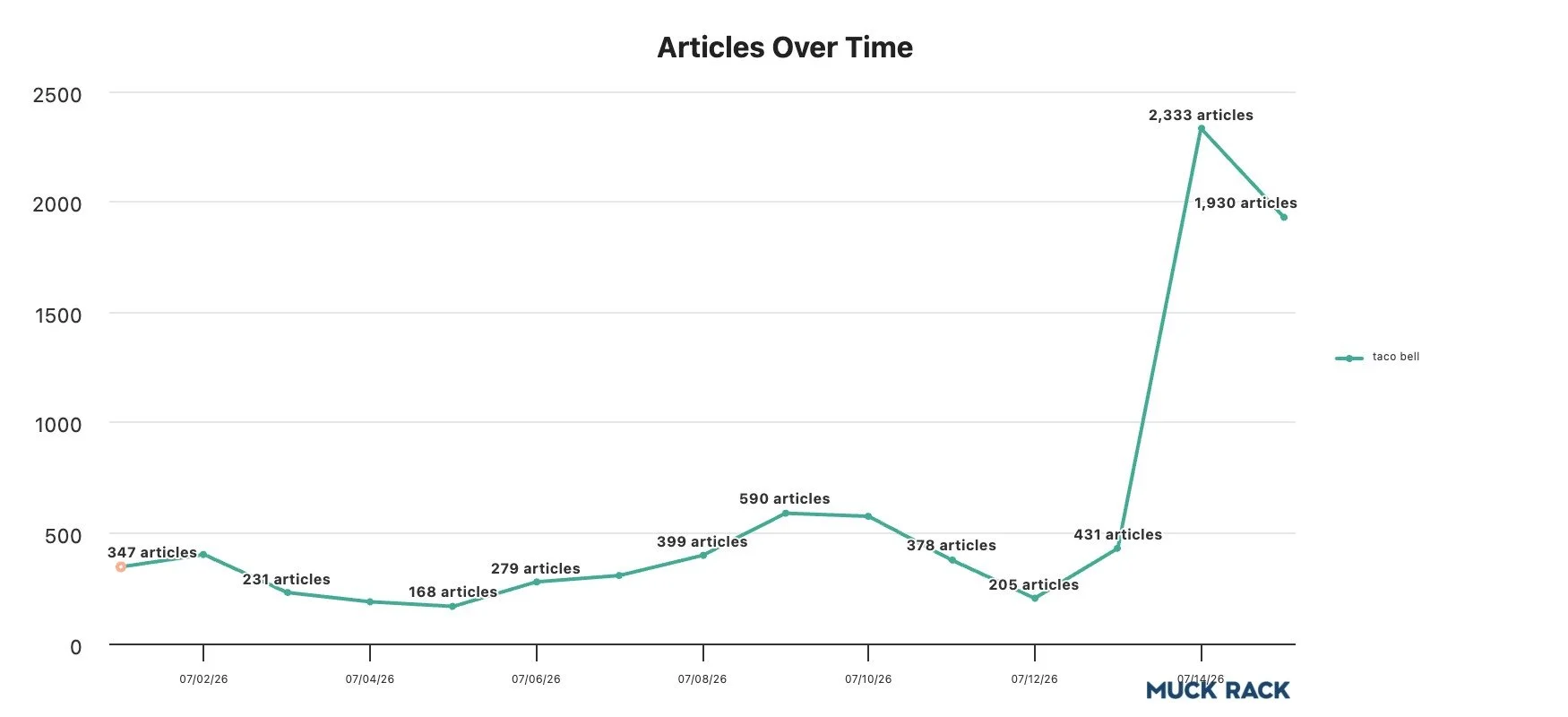
Of all the viral trends, this is not the one you want your brand to be associated with. What’s more, this is happening (as far as we know) to Taco Bell through no fault of its own. It’s a tough situation in the conference room for Taco Bell’s PR team: How do you get ahead of a crisis that still has no clear or direct cause?
Last week, I interviewed communications expert Matt See about the difference between attention and impact, and Taco Bell is getting a lesson in this firsthand. At first glance, Taco Bell’s response may seem disproportionate to the amount of noise online about the parasite and its potential links to the fast food chain. But, that’s not the whole story.
Instead of overreacting in an attempt to tamper down the conversation on social media or minimize negative coverage, Taco Bell has only released the facts up to this point: They’re removing menu items to protect their customers, just in case. It would be unwise to do anything else right now.
Brand positioning expert Peter Osborneshared his thoughts on Taco Bell's crisis on LinkedIn.
“In a crisis, your audience is watching three things: Do you move before you're forced to? Pulling products on your own beats waiting for a formal recall. Do you sound like a partner to regulators and customers, or like a defendant? Plain language, real updates, no spin. Do you show your work on the systems you're changing, or just wordsmith the statement?”
As a brand, there’s no use trying to communicate your way out of this crisis. Is it a great situation for Taco Bell? No. Are they doing the right thing from a PR perspective? Yes, I think they are, even though some won’t agree with me.
During an outbreak of a parasite with a still-unknown origin (besides fresh produce), are you going to rush out to buy fast food from Taco Bell, or are you going to be more discerning about what you eat until more details are resolved? Taco Bell is likely to take a hit from this no matter what, but they’d risk more by trying to control a narrative with so many giant gaps.
Listen to the full interview with Matt See about attention vs impact.
The High
The Richmonder Gets $1M Investment
We love a local news win at Spry PR. This week, The Richmonder—a nonprofit news organization focusing on local news that matters to residents of the community, without bias—announced that it will receive a $1 million investment from the American Journalism Project over the next three years. We frequently beat the drum about the importance of local news from a civic perspective but also for brands. Big congrats to founding editor Michael Phillips and the staff at The Richmonder!
The Home Stretch
Stop Letting Creative Ideas Die in the Conference Room
It’s the question all creative marketers and communicators dread most: “Has anyone ever done this before?”
Fortunately, Josh Rozman, Marketing Manager at Oberlin Filter Company, has never let that question stop him.
In a recent interview for Good Marketing with Stephanie, Josh talks about his approach to pitching Phil, the company’s cartoon spokescharacter, to senior leadership. And keep in mind, this is a brand with a highly technical product that we’re talking about.
Any creative idea is just that—an idea—that needs a concrete business justification if it has any chance at becoming something real.
“Most creative ideas don't really die in the marketplace, but they do die in the conference room,” Rozman explains. “It’s important to set up your thought process, especially as a creative, for someone that may not be exposed to the marketing world on a day-to-day basis. Don’t say ‘let's make a cartoon’ but instead set it up by talking about how your concept solves a problem, like making a complex technology more approachable.”
Like the sPRint? Share it with the rest of your team!
This is a 100% human-written newsletter (imagine that!). Be kind and share the marketing goodness here 👉 https://sprypr.co/newsletter-subscribe